Usage
This guide covers how to use AI Assistant effectively in your daily workflow.
Opening AI Assistant
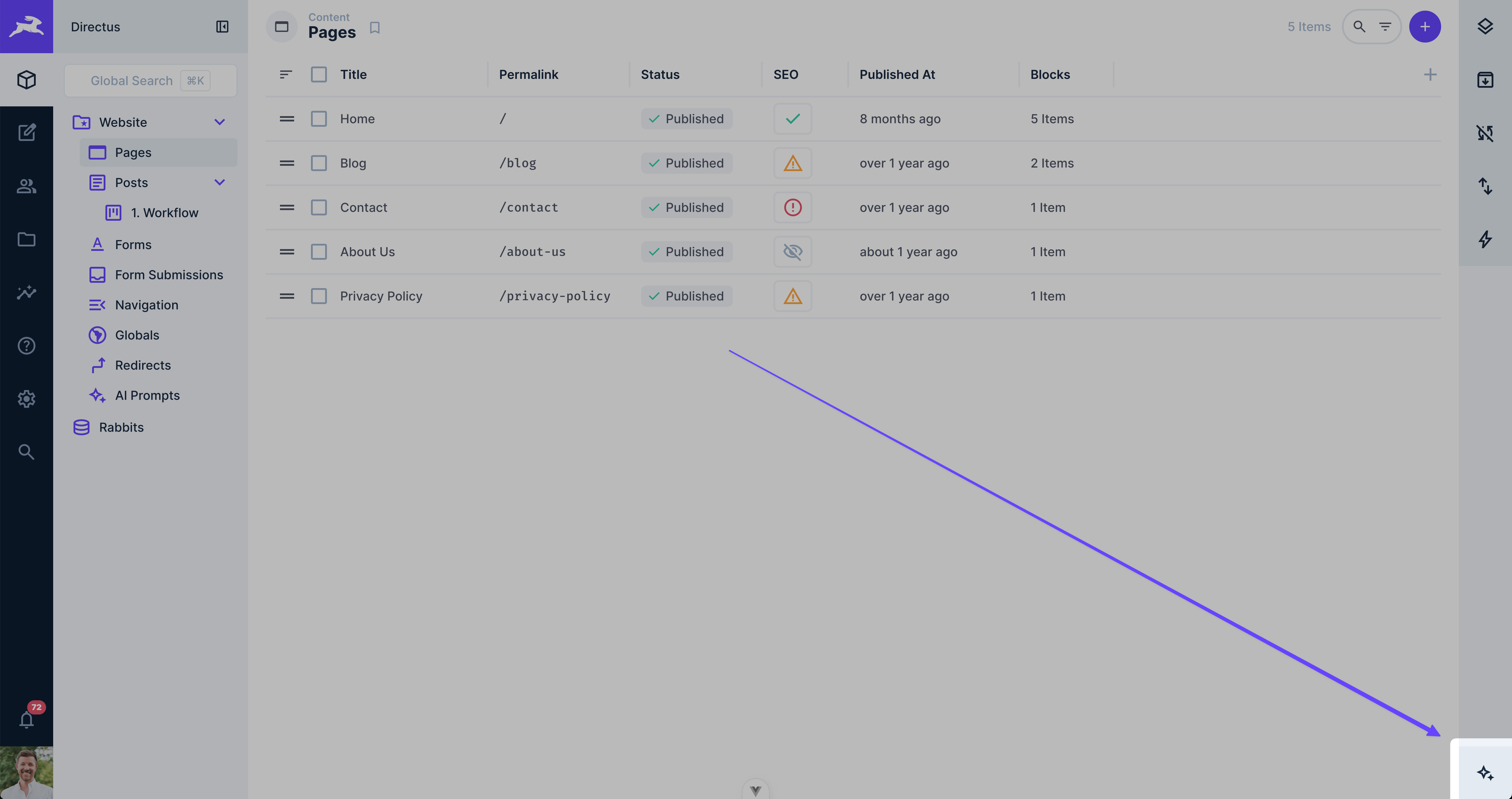
Click the AI Assistant button in the Directus right sidebar to open the chat panel. The panel appears on the right side of your screen and persists as you navigate.
Selecting a Model
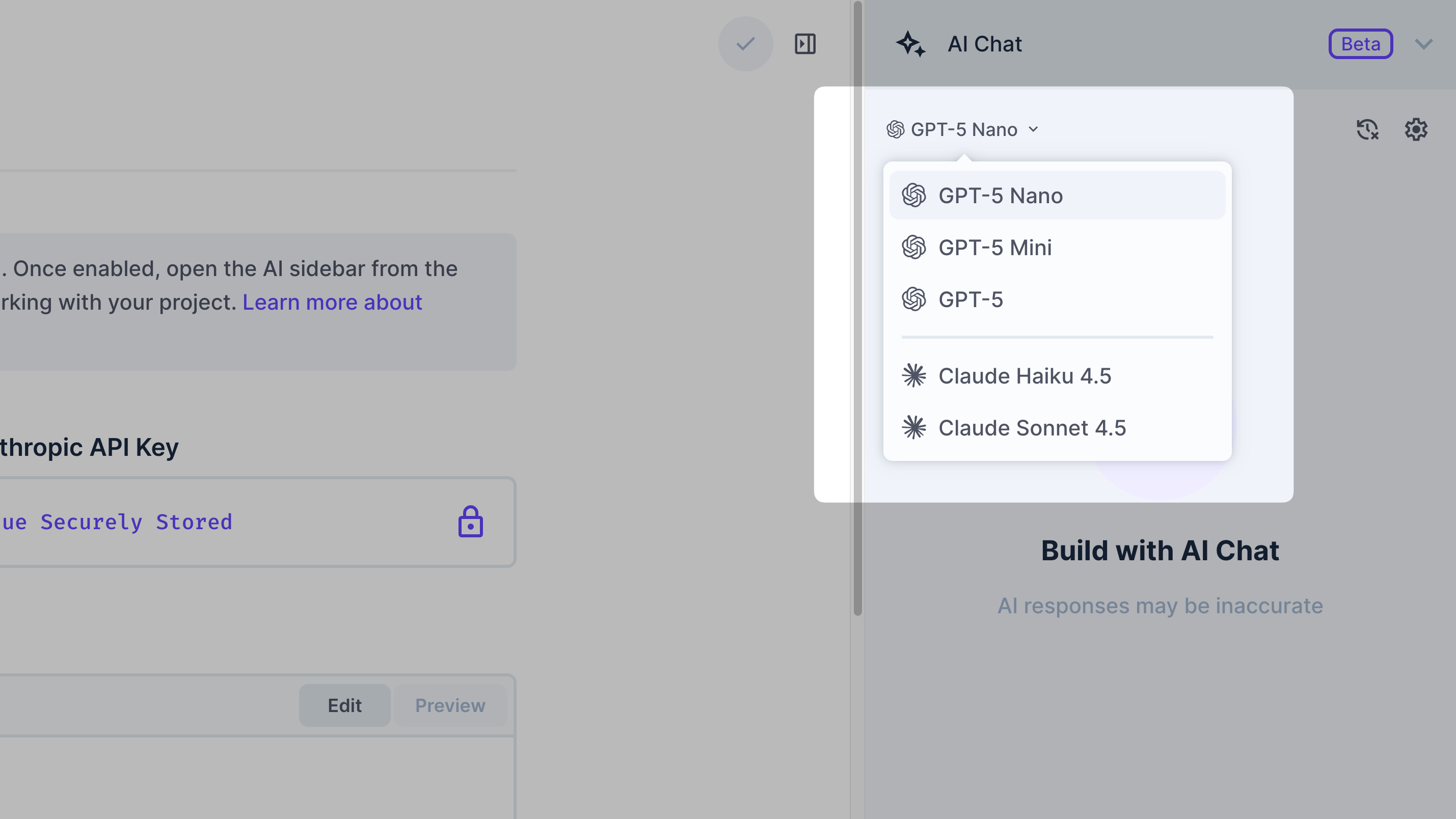
Click the model dropdown in the chat header to choose which AI model to use:
| Model | Best For |
|---|---|
| GPT-5 Nano / Claude Haiku 4.5 / Gemini 3 Flash Preview | Quick tasks, simple queries |
| GPT-5 Mini | Balanced speed and capability |
| GPT-5 / Claude Sonnet 4.5 / Gemini 3 Pro Preview | Complex operations, detailed analysis |
Only models for configured providers appear in the dropdown.
Having a Conversation
Type your message and press Enter to send (Shift+Enter for new line). Responses stream in real-time with full Markdown formatting.
Adding Context
Attach context to your messages using the Add Content button (+) next to the input field. Context helps the AI understand what you're working with and provide more relevant responses.
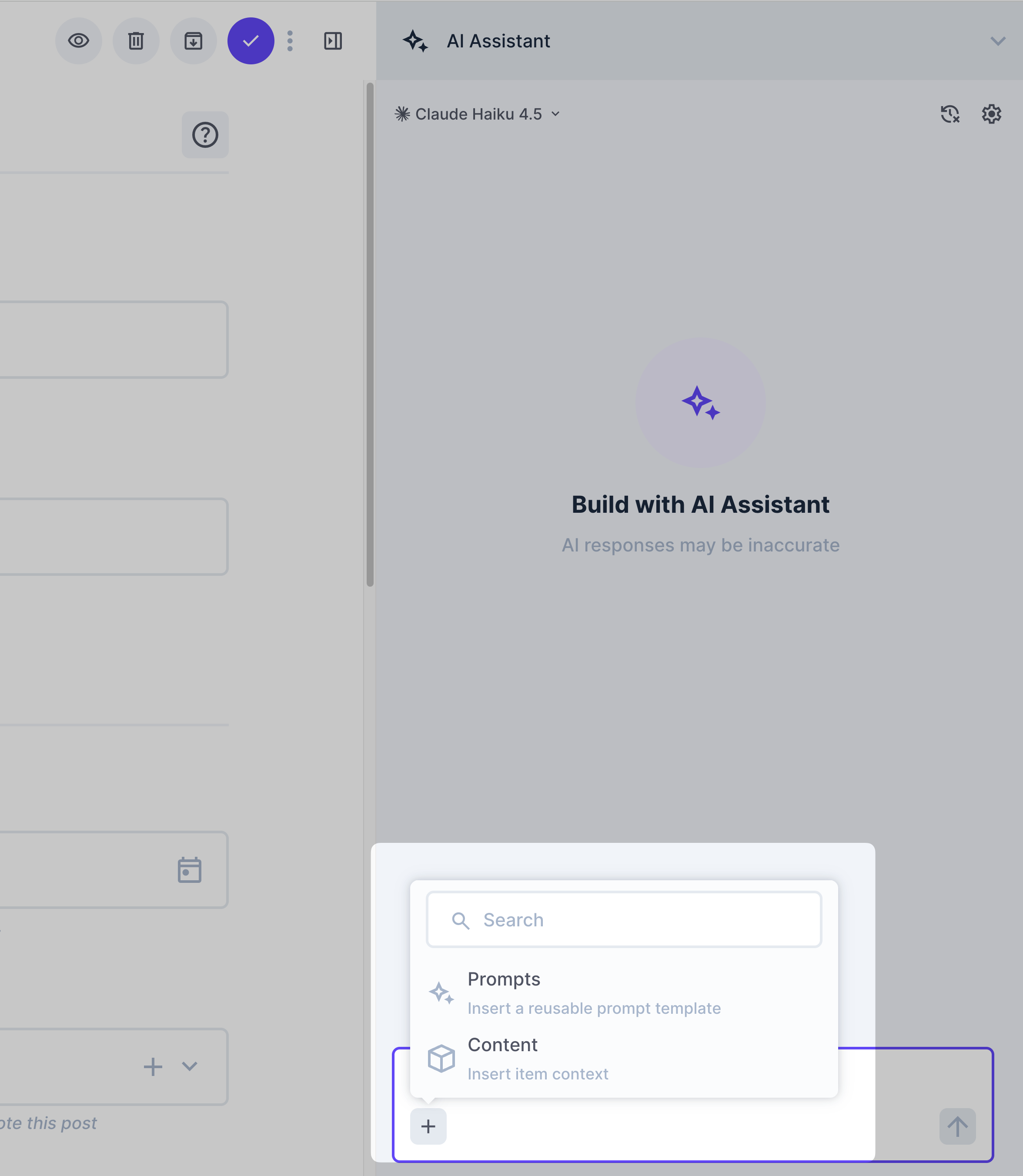
Click the + button to open the context menu where you can search and browse available content.
Prompts
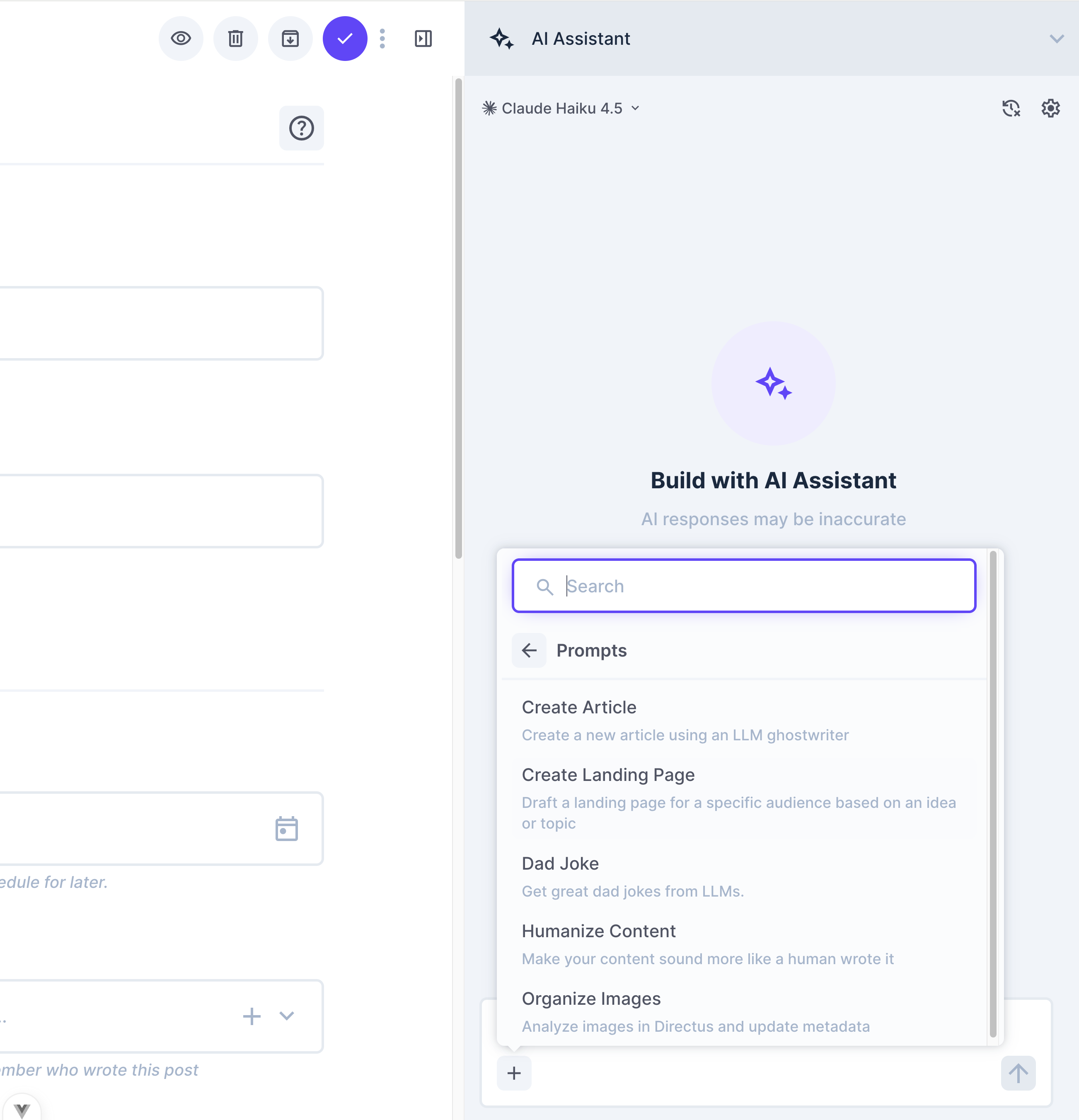
Reusable prompt templates stored in your Directus instance. Prompts can include variables using {{variable}} syntax. A dialog appears to fill in values when needed.
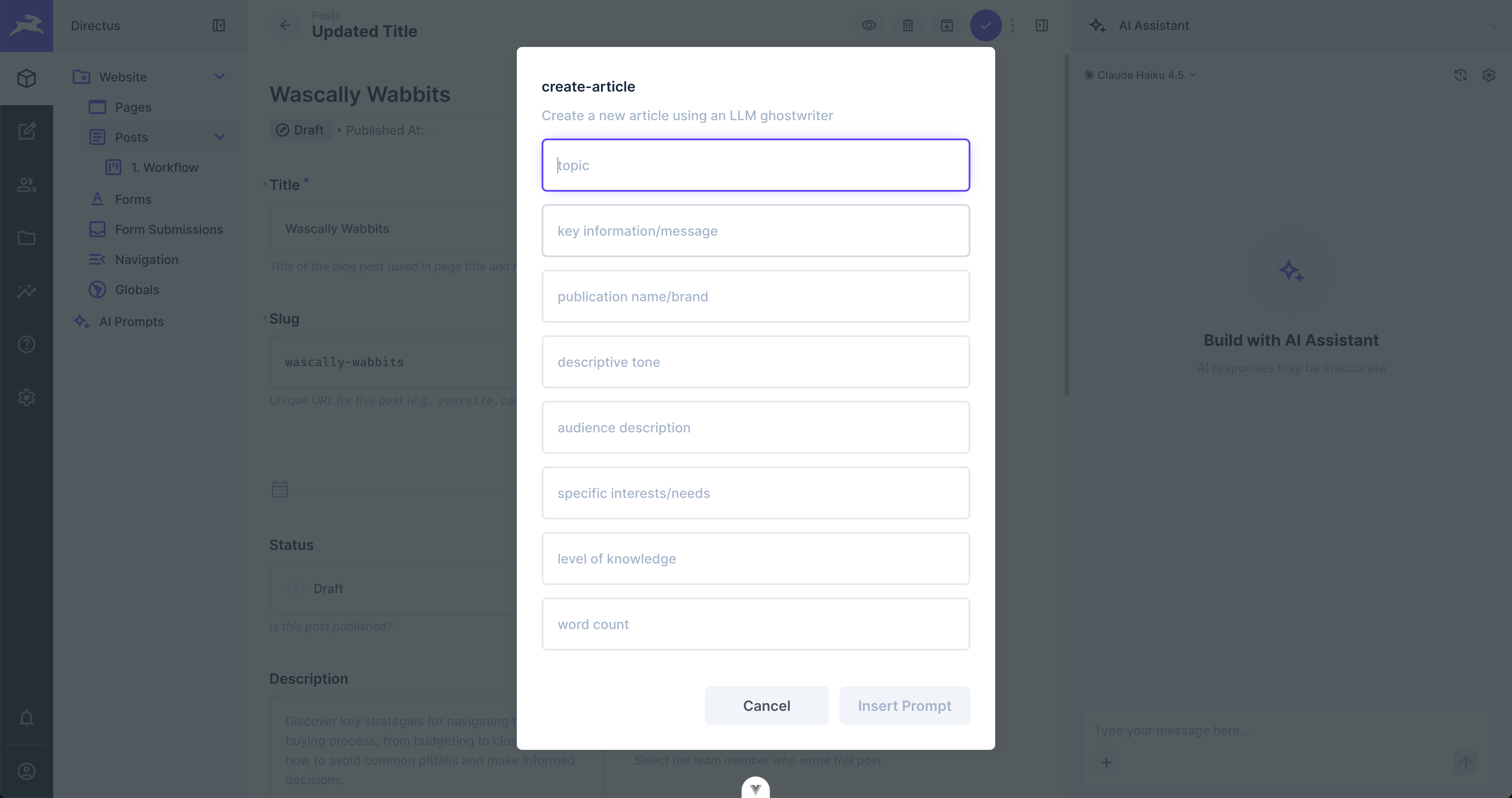
"Write a blog post using our brand voice"
Content (Items)
Attach items from any collection as context. Select a collection, then choose items from the drawer. The item data is captured as a snapshot when you send your message.
"Make this product description match the style of the attached article"
Visual Elements
When using the Visual Editor, you can add page elements as context. Click the AI icon on any editable element to add it as context. Hovering over visual element cards in the pending context bar highlights the corresponding element on the page.
"Translate this heading to Spanish"
Pending Context Bar
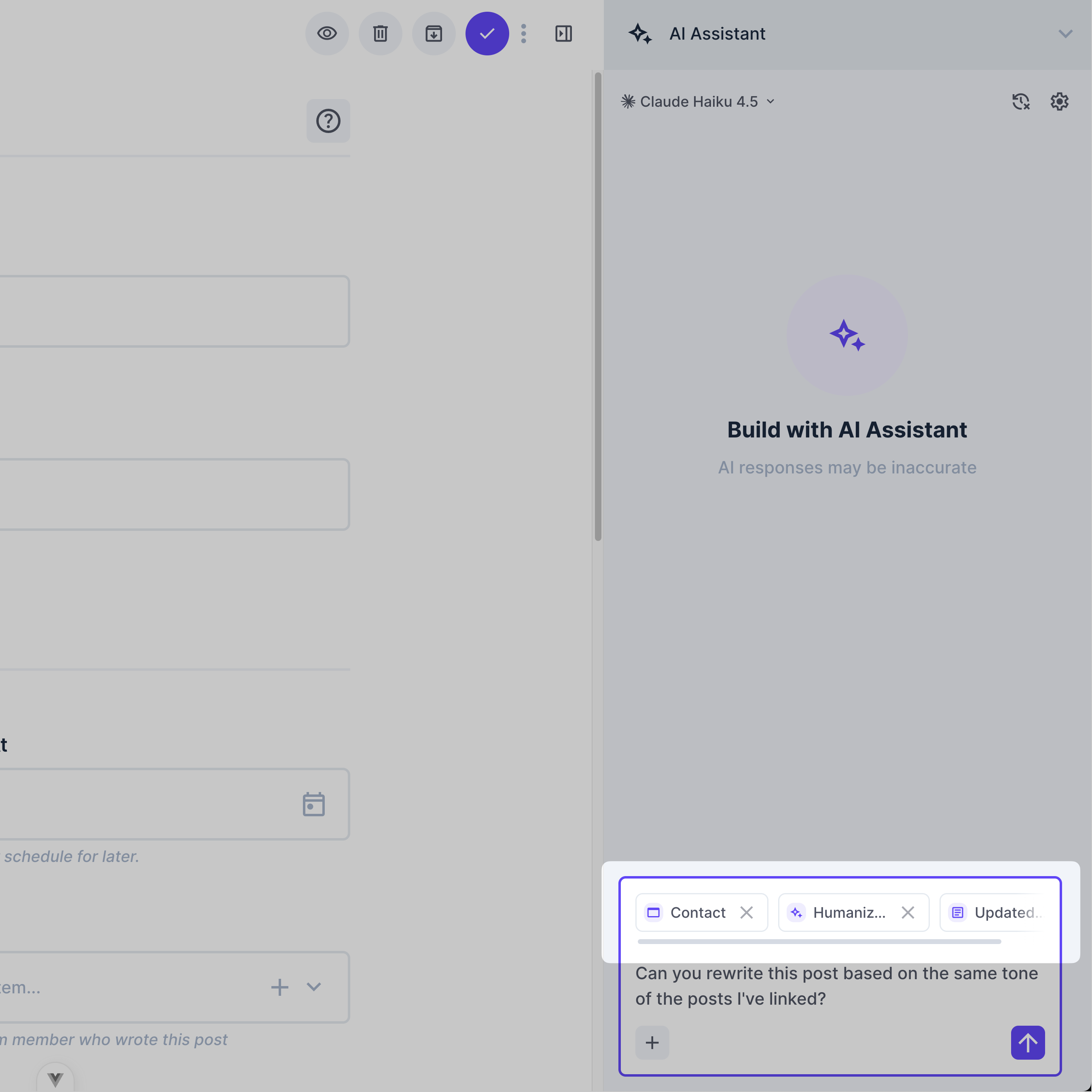
Selected context appears in a horizontal bar above the input. Each card shows an icon and display name—click the x to remove. You can add up to 10 context items per message.
Understanding Responses
AI Assistant displays several types of content in responses:
Text Messages
Standard conversational responses with Markdown formatting.
Reasoning Blocks
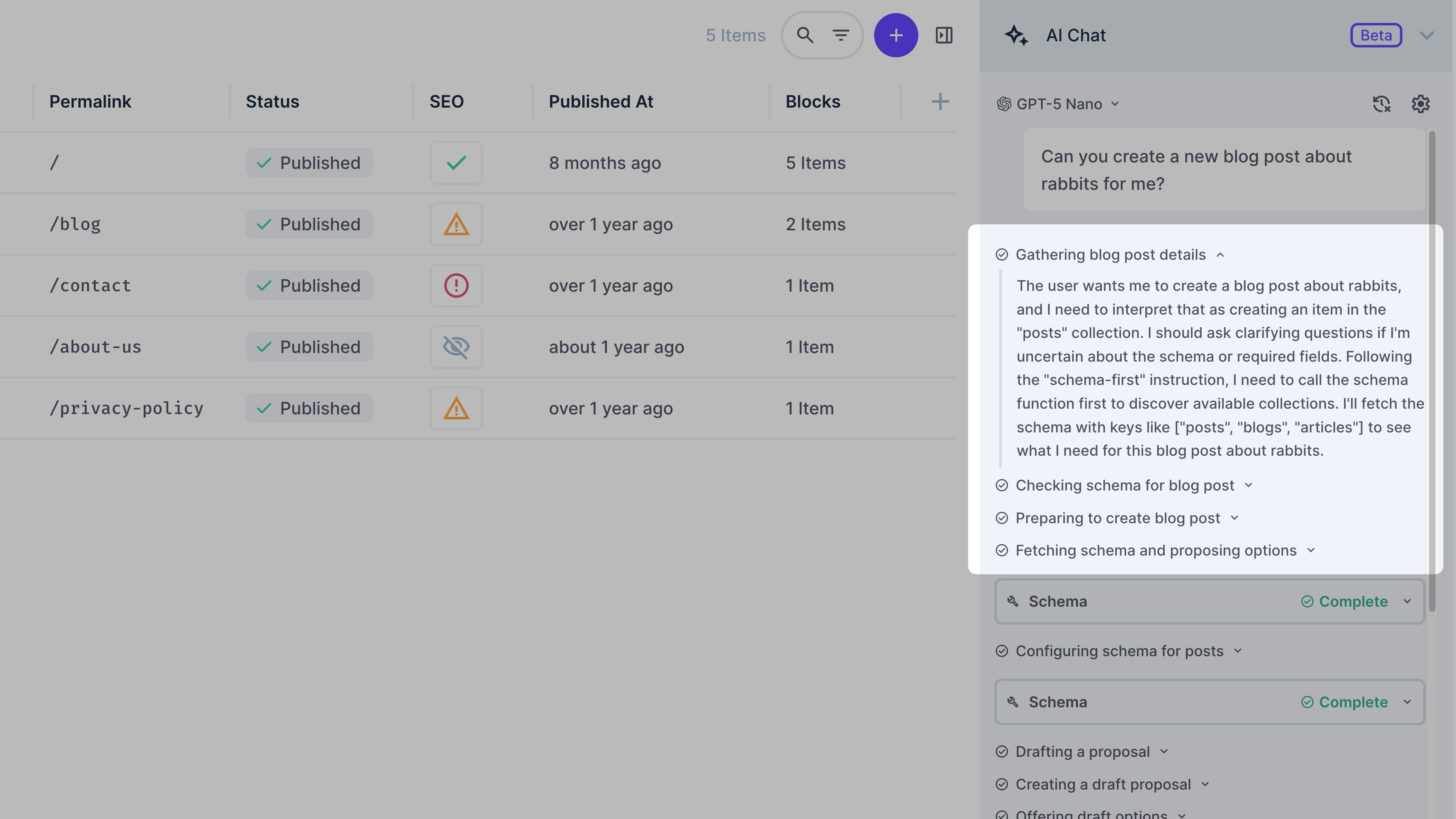
Collapsible sections showing the AI's internal reasoning (extended thinking). Click to expand.
Tool Calls
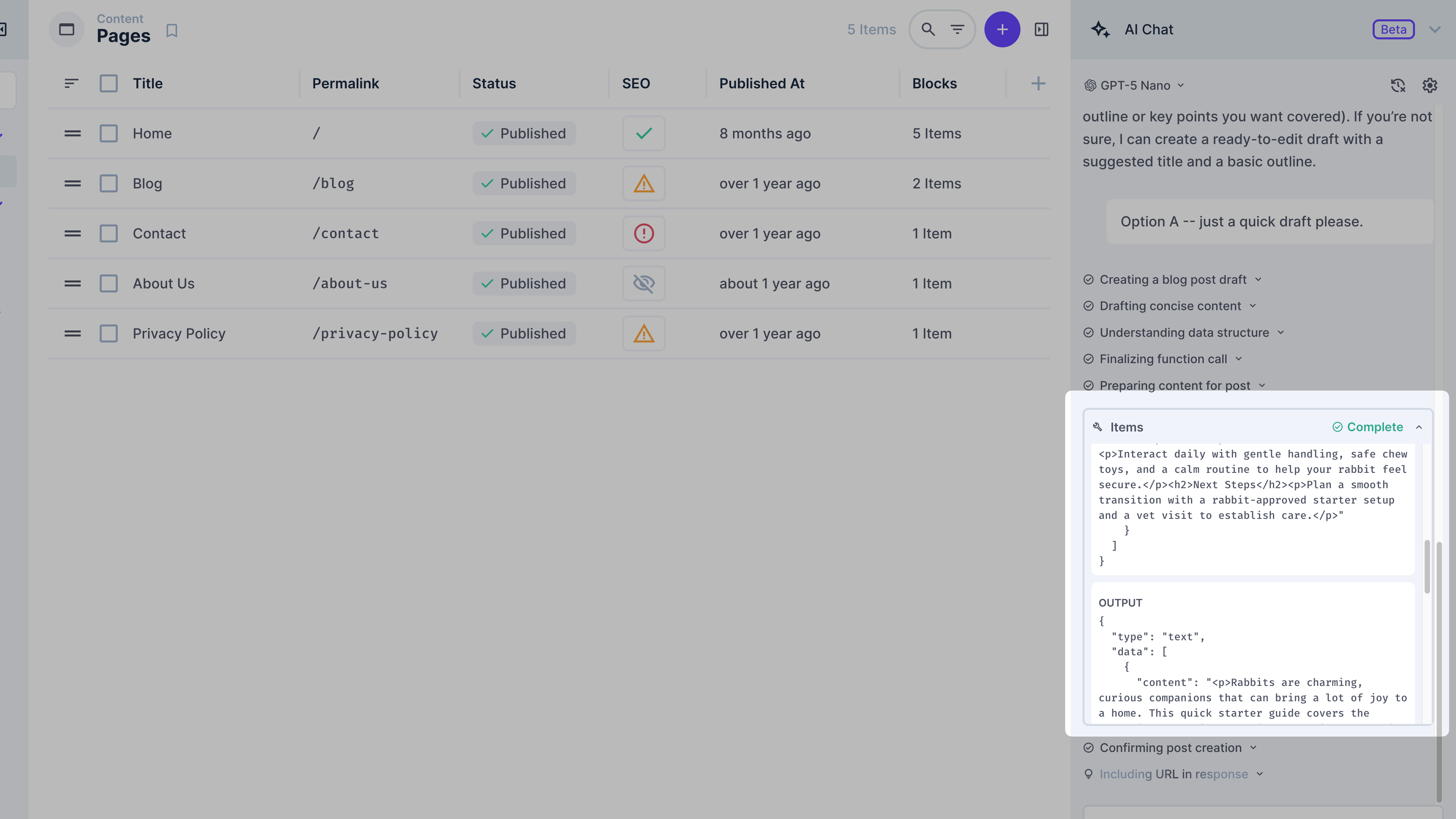
When the AI performs an action, it displays a tool call card showing:
- The tool being used
- Input parameters
- Results after execution
Tool Approval
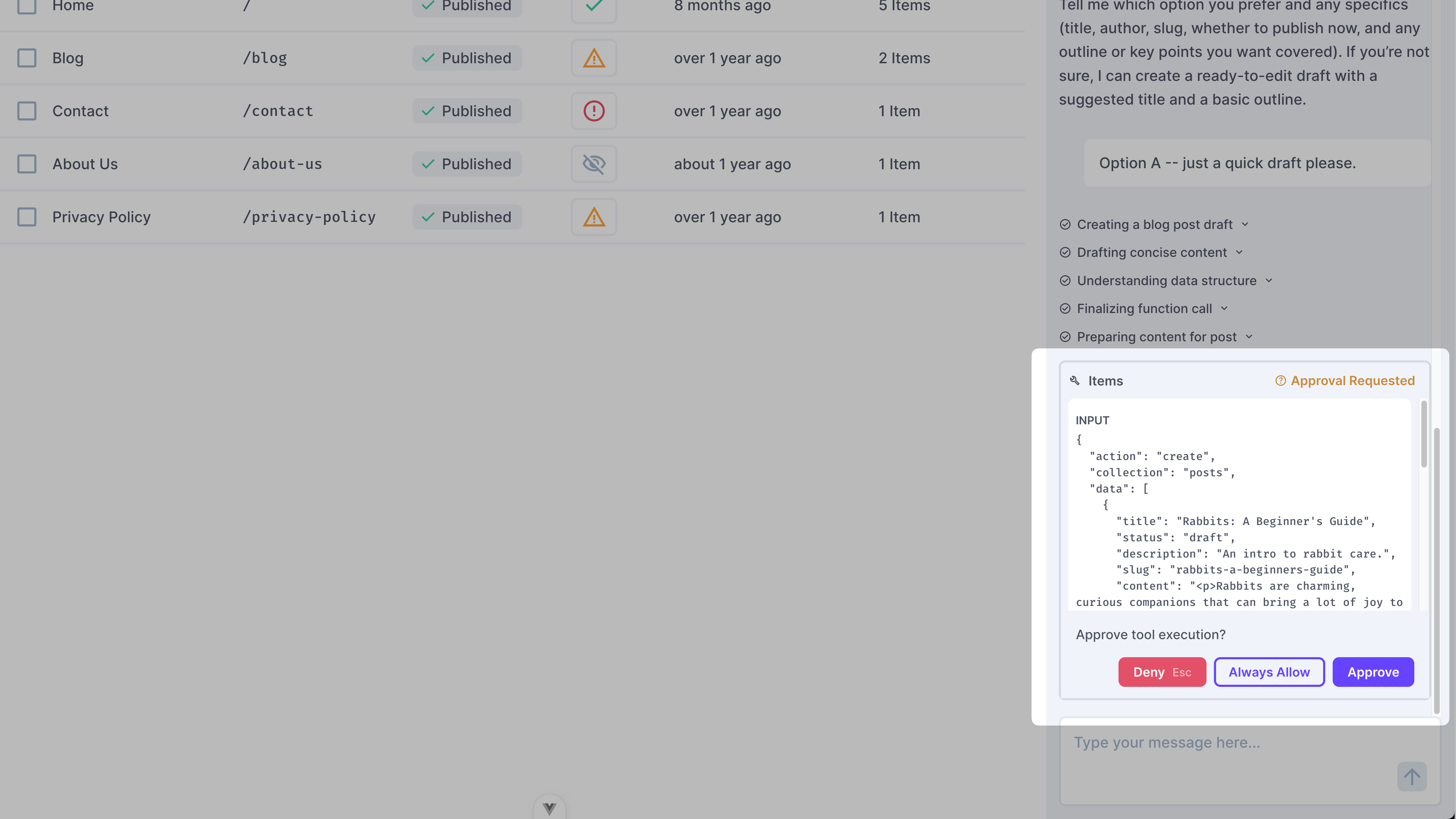
All tools require approval by default. When a tool needs approval, review the action then choose Approve, Deny (Esc), or Always Allow.
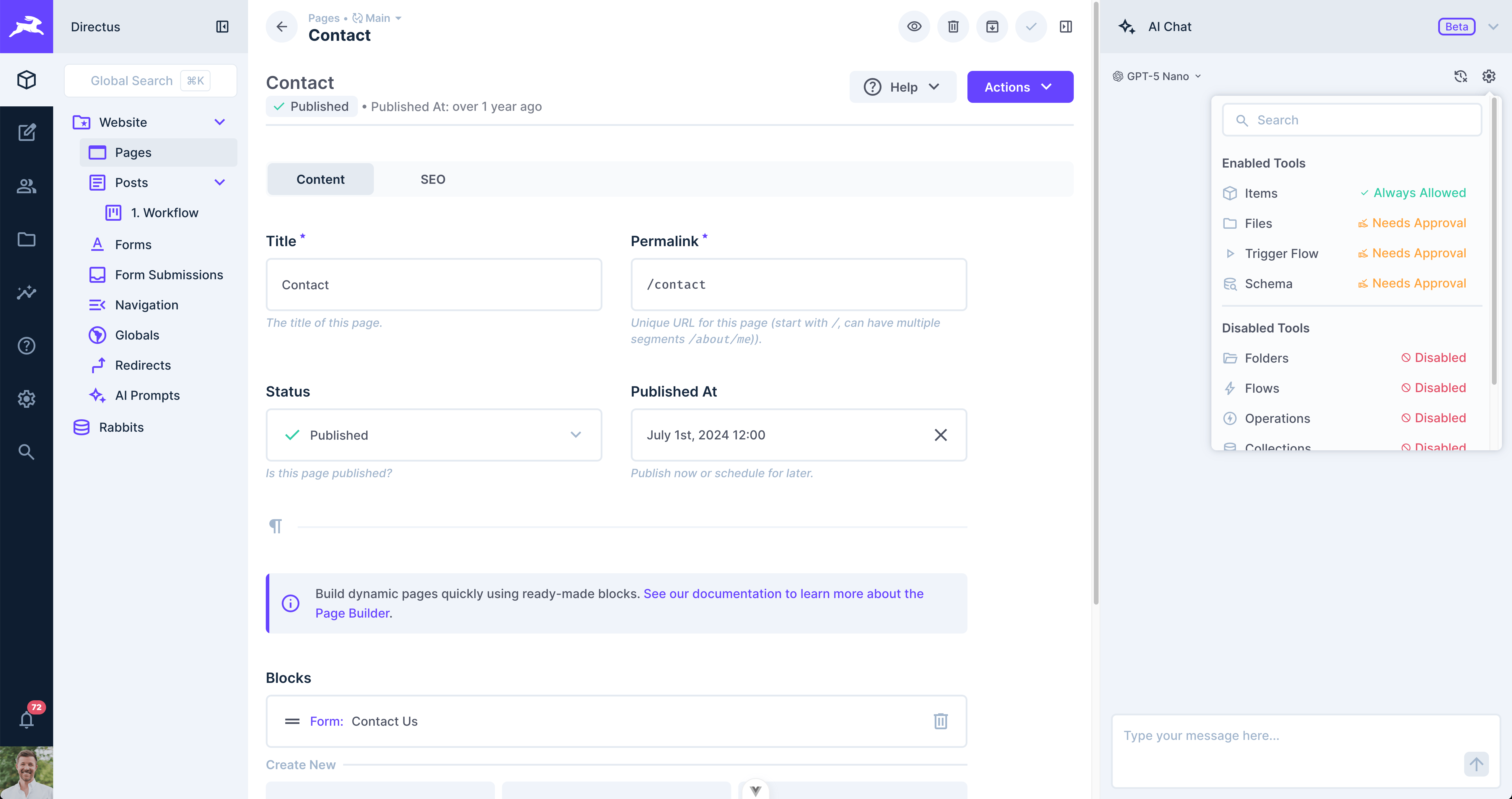
Configure per-tool approval settings via the gear icon in the chat header. See Tool Behavior for details.
Managing Conversations
Clearing the Conversation
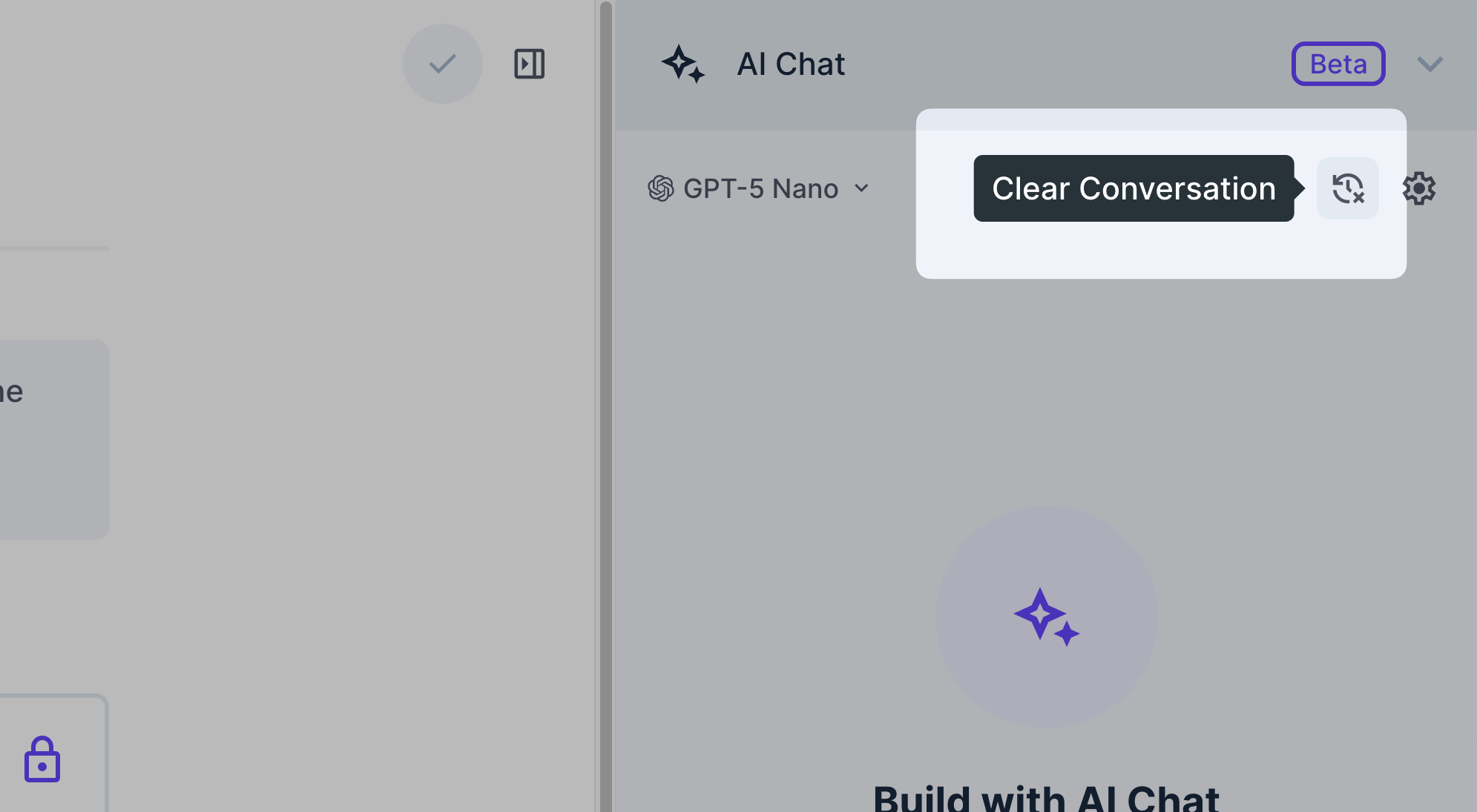
Click the clear button (trash icon) in the chat header to start fresh. This resets:
- Message history
- Token usage tracking
Stopping a Response
While the AI is generating a response, the send button becomes a stop button. Click it to interrupt generation.
Retrying After an Error
If an error occurs, a retry button appears. Click to regenerate the last response.
Context Limits
Data Storage
What's Stored in Your Browser
- Conversation history
- Selected model preference
- Tool approval settings
- Chat open/closed state
What's NOT Stored
- Conversations are not saved to the Directus server
- Conversations are not shared between users or devices
- Closing the browser or clearing local storage deletes history
Permissions
The AI operates with your existing Directus permissions. If you don't have access to a collection or operation, neither does the AI. See Security for more details.
Next Steps
Get once-a-month release notes & real‑world code tips...no fluff. 🐰